Bike
Barcelona to the Maresme by Train and Bike: Mataró–Calella
A train-assisted coastal ride from Mataró toward Calella, with honest gaps in the waterfront route and a railway bailout built into the day.
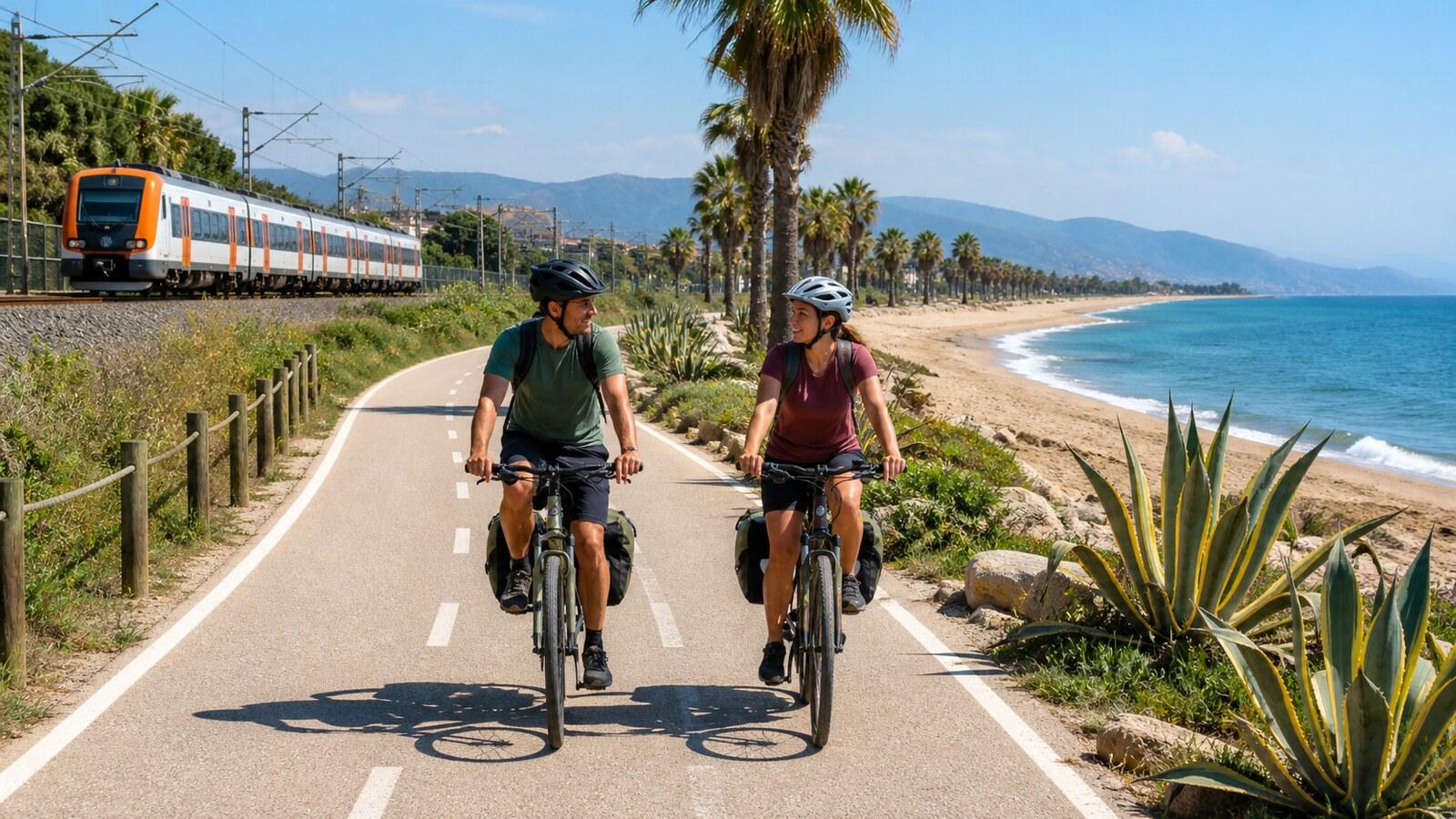
From a train window, the Maresme coast can look like one effortless ribbon between railway and sea. On a bicycle it is more complicated. Promenades end, beach sections become pedestrian territory, streams and roads interrupt the line, and summer crowds can turn a pleasant seafront into a place where walking the bike is the only courteous choice.
That does not spoil the day. It defines it: a flexible coastal ride from Mataró toward Calella, with R1 stations acting as planned exits rather than evidence of failure.
Take the train after the peak
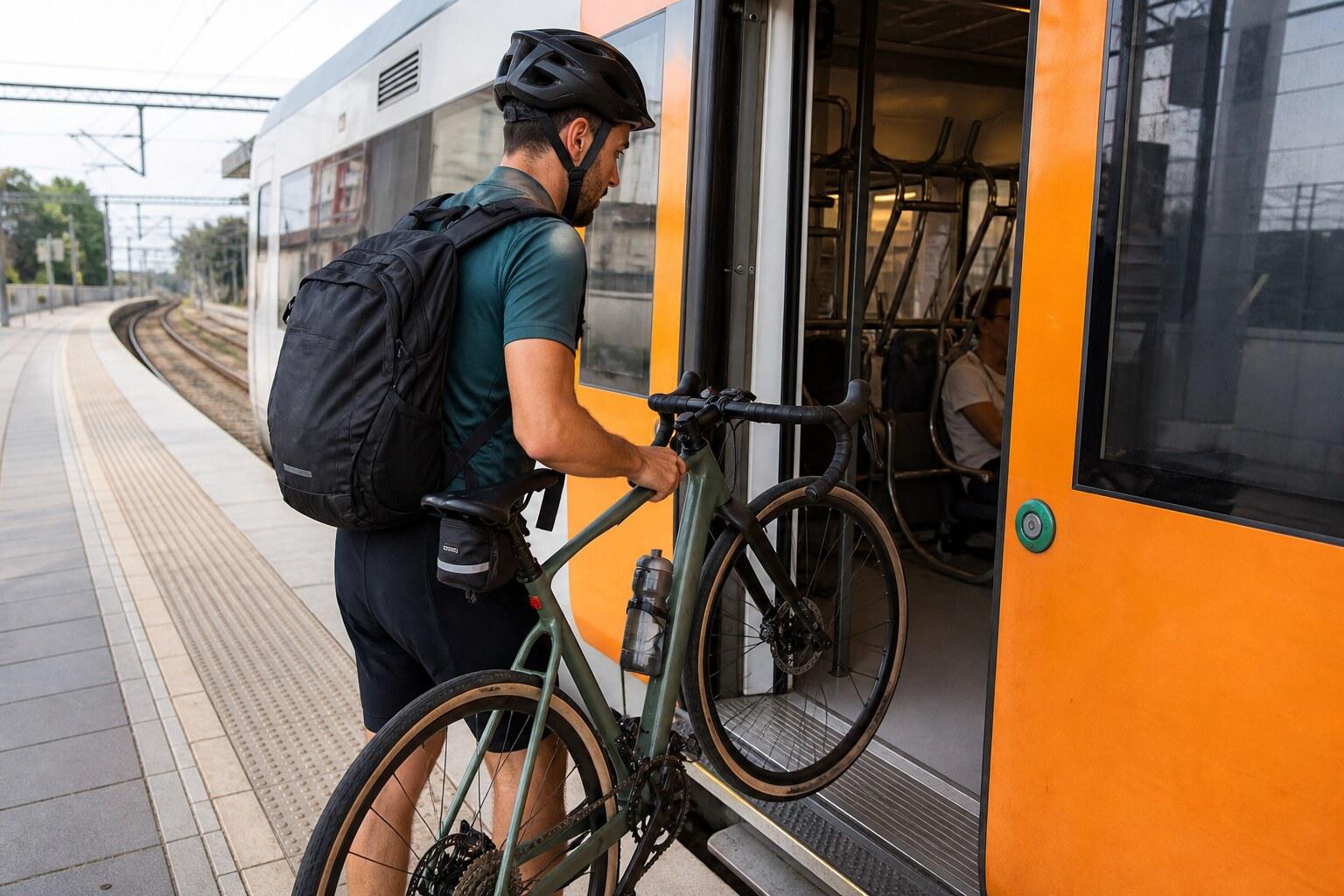
Board an off-peak R1 service from Barcelona with one bicycle per rider. Under the current Rodalies conditions of use, bicycles travel free on all lines without a fixed time restriction when occupancy permits. Staff can refuse access when a train is too crowded, and the rider remains responsible for loading, guarding and positioning the bicycle without obstructing others.
In practice, avoid commuter peaks, spread the group across available bike spaces and let passengers leave before rolling aboard. Check lifts at both ends if stairs are a problem. Replacement buses may not carry bicycles, so read the current R1 service information on the morning of travel, not after reaching the platform.
Ride the coast that exists
Mataró is a useful start because it has services, shops and an early chance to find a mechanical problem. Check brakes, tyres, lock and battery range at the rental point. A hybrid or e-bike handles repeated starts and inland diversions more comfortably than a pure road setup.
From Mataró, work north through local waterfront and town streets toward Arenys de Mar, Canet de Mar and, if time and conditions allow, Calella. Expect roughly 35–45 kilometres depending on the exact diversions. This is not a single protected signed trail. Navigation matters, and any legal inland street is preferable to forcing a bicycle through a packed pedestrian promenade.
Dismount where signs require it and wherever density makes riding inconsiderate. Sand on paving reduces grip, while side winds can become tiring on exposed sections. Keep lights on through shaded underpasses and give railway crossings their full attention.
Make every station a real finish
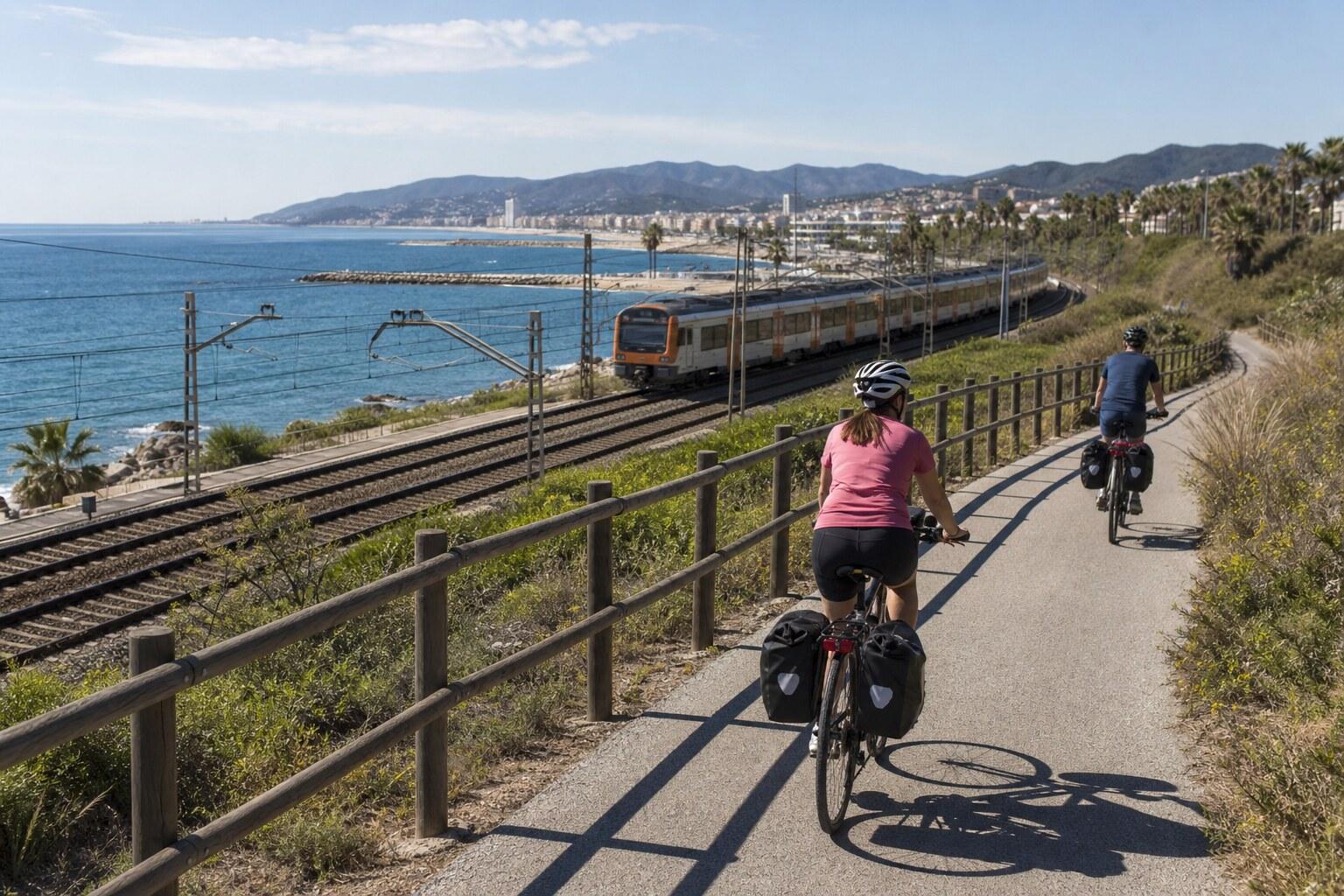
Before leaving Mataró, save Arenys, Canet and Calella stations and learn which side of the tracks gives platform access. The first bailout should come before the group is exhausted. If heat, wind or crowds slow progress, finish at the next practical station rather than trying to recover time by riding faster through shared space.
Allow five to seven hours including trains, breaks and a meal. Budget €15–45 per person when bringing a bicycle; rental can raise the total substantially. Compare bike activities around Mataró only after confirming pickup, return time, lock, repair support and whether a one-way drop is genuinely included.
Carry two water bottles in summer, sun protection, a basic repair kit and enough charge to display offline maps and train tickets. Eat before the return deadline becomes tight. A late lunch beside the sea is enjoyable only when it does not end with a sprint to an unfamiliar platform.
If rail disruption removes bicycle access, postpone the linear plan. Riding out and back from Mataró is the coherent fallback; loading bikes onto an unconfirmed bus is not.
Verify weather, R1 operations, bicycle capacity and promenade restrictions on the day.
Related guides
- El Prat and the Llobregat Delta: A Flat Cycling Day
Cycle from El Prat to the coast via aircraft viewpoints, with route surfaces, rental checks, wetland bike restrictions and return options.
- Tren Petit Greenway: Palamós to Palafrugell by Bike
Ride the Tren Petit between Palamós and Palafrugell with surface advice, town approaches, rental questions and an optional Castell branch.
- Pirinexus Figueres to Roses: A One-Way Bike Day
Ride the mostly flat Pirinexus Litoral from Figueres toward Roses, with the wetland branch, wind and one-way bicycle return settled first.
Are you in the know?
Receive new articles, local updates, and occasional offers from selected partners. We never share your email address. Unsubscribe at any time.
By subscribing you agree to our privacy policy.