Bike
Taking a Bike on Catalan Trains: What Actually Works
Match your bicycle to Rodalies, FGC or high-speed rules before booking, with packing limits, station tactics and refusal fallbacks.
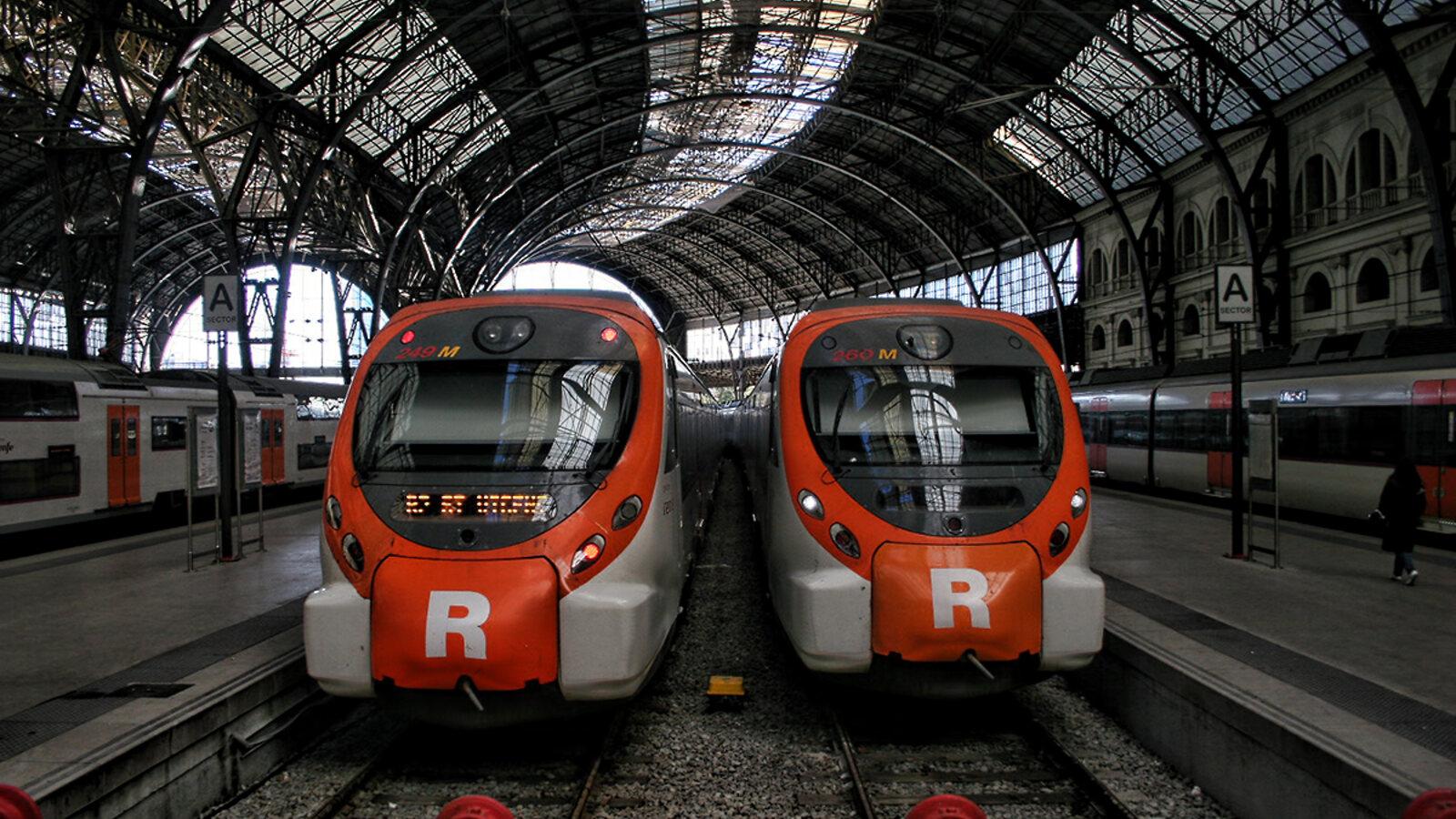
The destination printed on a ticket does not tell you whether your bicycle will board. Barcelona–Girona can mean a Rodalies regional train that accepts an assembled bike if space remains, a high-speed train that requires it to be folded or dismantled, or an operator with its own bag dimensions and approval process. The train number and operator decide; the city names do not.
Before paying, label every leg Rodalies de Catalunya, FGC, Renfe high-speed/Avant, iryo or OUIGO, then decide whether the bicycle will be complete, folded or dismantled in a closed bag. If one leg fails that test, choose another departure or pack for the strictest leg. Permission in a policy is not a guaranteed space on a crowded train.
The service name determines the bicycle state
| Service on the ticket | Complete bicycle | Packed bicycle | What secures the trip |
|---|---|---|---|
| Rodalies de Catalunya, including its Regional services | Free, subject to room and staff control | Folding bikes travel as hand luggage | An off-peak departure and a later eligible train in reserve |
| FGC trains and funiculars | Free in the marked area, subject to occupancy | Usually unnecessary for an ordinary bicycle | Use the designated space and yield priority areas |
| Renfe AVE, AVE International, Alvia, Euromed, Intercity | Not accepted complete | Folded or dismantled under the applicable size rule; a bicycle add-on is required for larger special luggage | The correct complement on the same train and a compliant closed bag |
| Renfe Avlo | Not accepted complete | Folded or dismantled with the required additional-luggage option | Confirm the bag in the booking flow before paying |
| Renfe Avant | Only rely on a complete-bike place when the sale shows Plaza bicicleta disponible and issues Tren+bici | Dismantled bicycles up to the stated limit travel without the bicycle complement | A bike place shown on the exact departure, or a packed bike |
| iryo | Not accepted complete | Dismantled in a closed bicycle bag, maximum 90 × 120 × 40 cm | Prior permission from iryo at least two hours before travel, still subject to space |
| OUIGO Spain high speed | Not accepted complete | Dismantled in a specific bag, maximum 120 × 90 cm and 25 kg | Add it as additional luggage and comply with the current ticket conditions |
Do not translate “Regional” on one website into Renfe’s national Media Distancia rule. The Rodalies de Catalunya FAQ governs both its commuter and Regional services: bicycles travel free, on all lines and without a time restriction when sufficient room is available. Staff may refuse them when passenger volume is high.
That makes Rodalies the simplest assembled-bike choice, not a reserved bicycle service. A ticket gives the rider transport; it does not fence off floor space for the bike.
Rodalies and FGC solve different parts of the map
Rodalies and Regional trains reach common ride starts such as Girona, Tarragona and stations along the coast. Board at the door nearest a bicycle or multifunction symbol when the train provides one. Let passengers leave first, remove loose panniers if they make the bike hard to control, and keep the wheels out of the doorway and evacuation route. The rider remains responsible for the bicycle throughout the journey.
FGC covers the Barcelona–Vallès and Llobregat–Anoia networks as well as the Lleida–La Pobla line and several mountain railways. Its current bicycle guidance allows bicycles free when occupancy permits and requires them to be placed only in the spaces intended for them. Walk the bicycle in stations and on platforms; “may carry” is not permission to ride through the concourse.
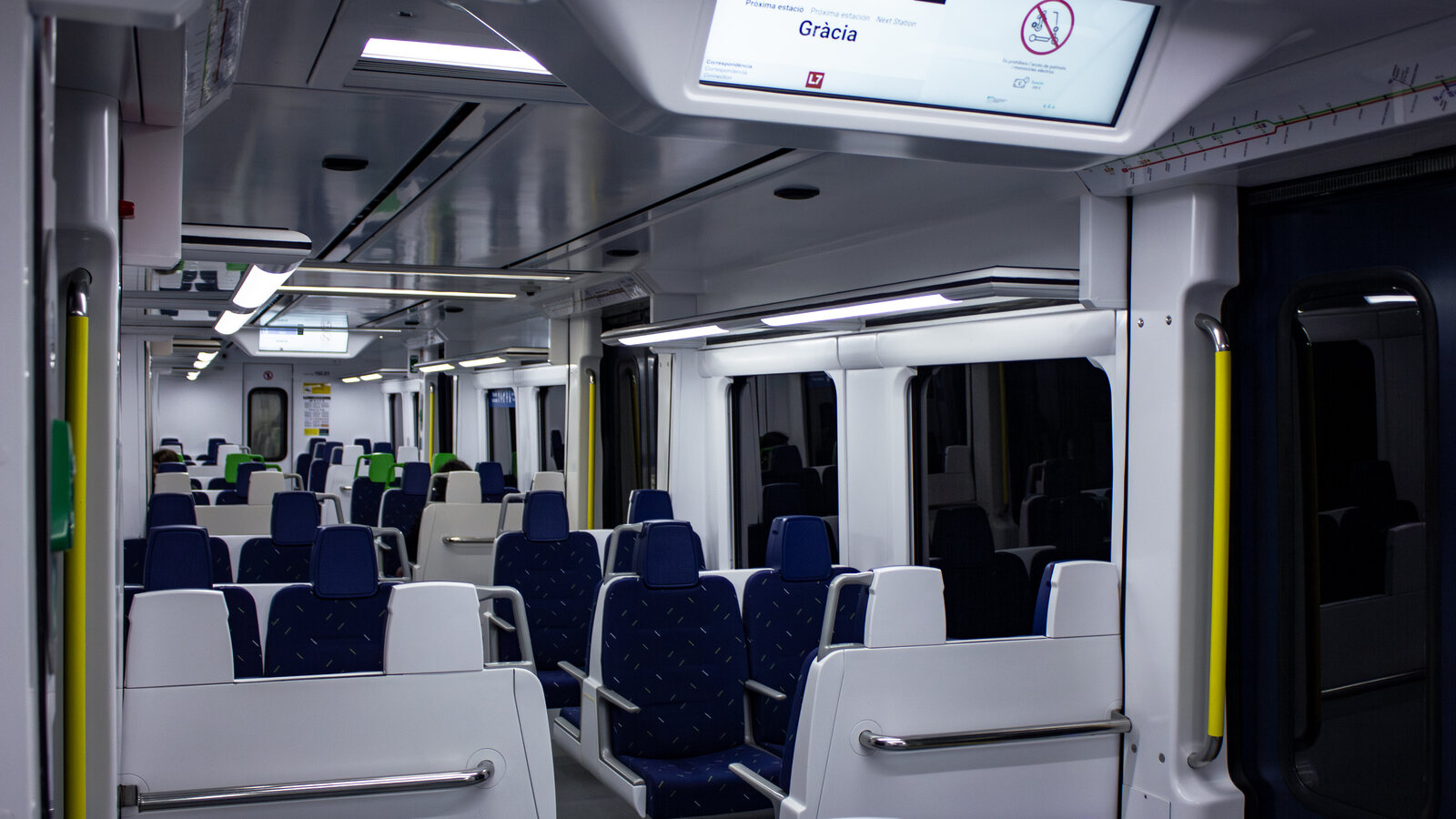
A multifunction area is not exclusively a cycle bay. A wheelchair user has priority over a touring bicycle, and a pushchair or passenger flow may make the nominal space unusable. If the vehicle is already crowded, step back before the doors close and take the next service. Splitting a group across two trains is safer than filling every flexible area with bicycles.
High speed begins with a tape measure, not a departure board
For Renfe, first test whether the folded or dismantled bike is small enough to be hand luggage. Its bicycle rules treat a completely folded bike whose three dimensions total no more than 180 cm as hand luggage on most services. A dismantled bicycle classed as special luggage must be in a closed bag no larger than 140 × 90 × 40 cm; the detailed Renfe conditions also require the pedals removed and the handlebar turned 90 degrees.
On AVE, AVE International, Alvia, Euromed and Intercity, the larger dismantled bicycle needs the operator’s bicycle complement and availability can be limited. A complete bicycle is not accepted. Avlo uses its additional-luggage option instead. For Avant, use the live booking result: carry a complete bike only when that exact departure offers Plaza bicicleta disponible and the ticket includes Tren+bici. Otherwise dismantle and bag it.
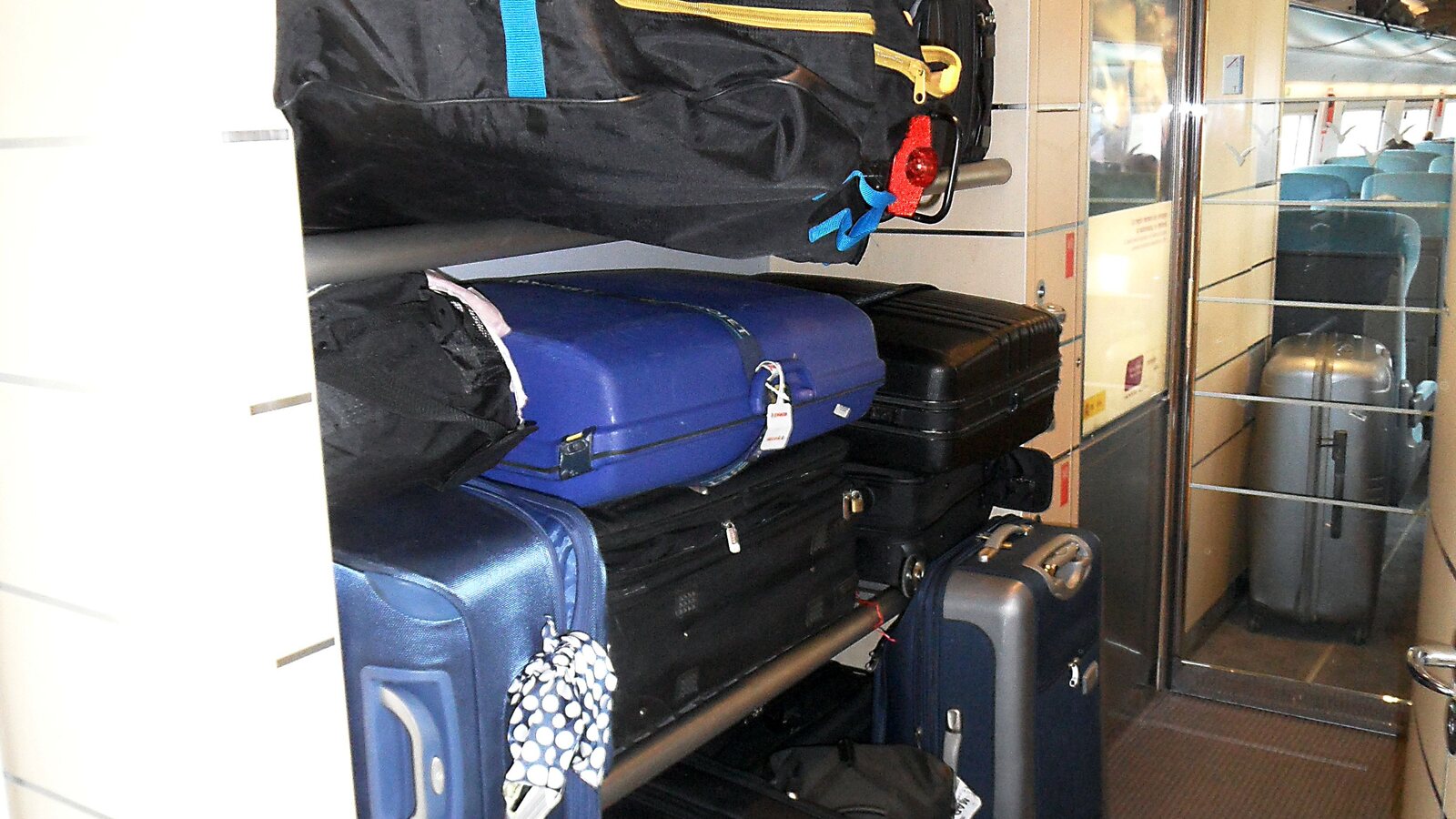
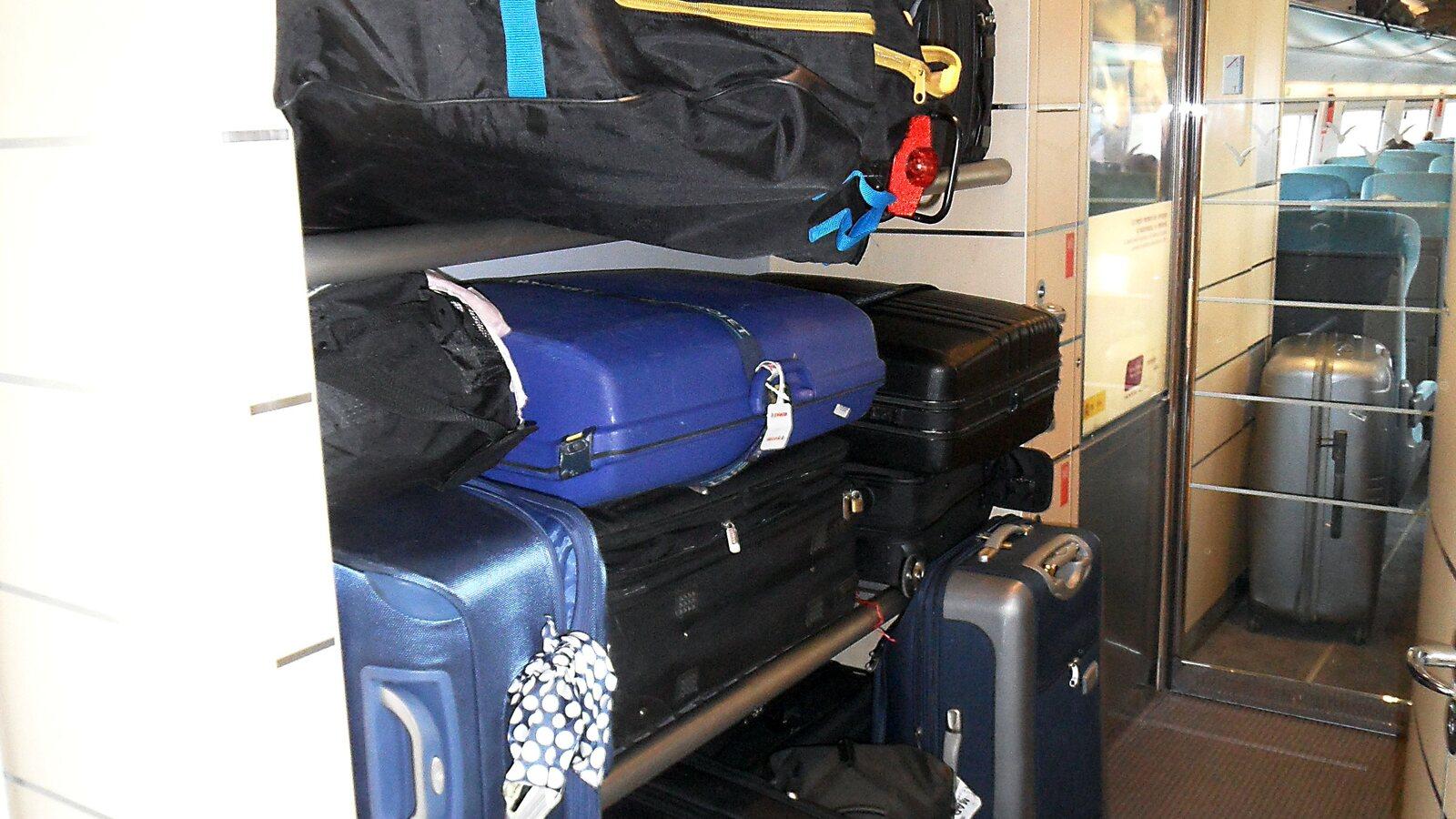
Measure the finished package at home, with the wheel, pedals, handlebar, rack and guards in their travel positions. A nominal “road-bike bag” can still exceed a limit once packed. Protect the derailleur and brake rotors, close every zip, and attach loose parts inside the bag. You must be able to lift and place it without help; the rack may already contain ordinary luggage.
Do not budget from an old blog post. Rodalies and FGC do not charge for an ordinary bicycle, but high-speed supplements and fare bundles can change. Price the complete journey in the operator’s checkout and confirm that the bicycle or luggage option appears on the issued ticket.
iryo and OUIGO do not inherit Renfe’s measurements
A high-speed platform at Barcelona Sants may serve several operators. Renfe’s 140 × 90 × 40 cm limit is not a network-wide Spanish standard.
Iryo’s bicycle FAQ requires a dismantled bicycle in a fully closed special bag no larger than 90 × 120 × 40 cm. The passenger must request and obtain permission through iryo customer service or a station sales office at least two hours before departure; carriage remains subject to available space.
OUIGO Spain’s conditions of carriage require a dismantled bicycle in a purpose-made bag no larger than 120 × 90 cm, weighing no more than 25 kg, and treat it as additional luggage. Select the matching option in the Spanish booking flow. Do not substitute dimensions or offers from OUIGO France pages.
Electric bicycles deserve an operator-by-operator check. Renfe’s bicycle page excludes e-bikes from its battery-powered personal-mobility restrictions, and OUIGO’s Spanish terms allow them when the bicycle conditions are met. Iryo’s current general conditions prohibit electric bicycles. A heavy e-bike may also be impossible to carry safely through a lift outage even where its transport is technically allowed.
Barcelona Sants is the transfer test
At Barcelona Sants, a change between Rodalies and high speed changes more than the platform. The bicycle may move from assembled vehicle to special luggage, and the high-speed leg includes access control. Girona and Lleida Pirineus combine conventional and high-speed services too; Tarragona city station and Camp de Tarragona are separate places, so never read “Tarragona” as a guaranteed same-building transfer.
The Adif accessibility list includes Barcelona Sants, Girona, Camp de Tarragona and Lleida Pirineus among stations with immediate assistance, but that does not certify that every lift is working or that a loaded bicycle fits it. Assistance services exist for passengers who qualify for them, not as a bicycle porter. Check the individual station page and live notices, then allow your own handling margin.
For an unfamiliar major station, arrive 25–30 minutes earlier than you would without a bike. Use lifts where available, but never force a loaded bicycle into a crowded car or balance it on an escalator. If stairs are the only visible route and you cannot carry the load securely, ask station staff for the safe step-free route. Do not leave the bicycle unattended while moving bags in stages.
Build the booking around one failure
The robust itinerary is not merely the fastest result in the journey planner. It has one recoverable failure already priced into the day.
- Search the journey and write down the operator and service family for every train.
- Choose assembled, folded or dismantled transport for each leg; the strictest leg controls the packing plan.
- Confirm a bicycle place or luggage option where required before buying the passenger ticket.
- Save the ticket and the relevant current conditions offline, then photograph the packed bike beside a tape measure.
- Identify one later eligible train. Check whether changing to it would require a new bicycle reservation.
- Recheck disruption notices on the morning of travel, especially when engineering work is advertised.
A direct Regional train can be a better bike service than a faster high-speed itinerary with a short Sants connection. Conversely, a properly packed bike on a direct high-speed train can remove the crowding uncertainty of two assembled-bike trains. The right answer depends on whether time, uninterrupted riding setup or guaranteed compliance matters most.
A replacement bus is a new vehicle, not the same promise
When rail service is replaced by road transport, do not assume the train’s bicycle permission transfers to the bus. The current Rodalies alternative-road-transport conditions put ordinary bicycles in the luggage hold, free but subject to available space and cleanliness; the number carried depends on the vehicle. A specific disruption may use a bus without usable capacity.
Read the notice for that engineering closure before leaving. If carriage is uncertain, move the ride to a station before the replacement section, choose a different line, or postpone. Do not arrive expecting the driver to fit a bicycle among full luggage bays.
If staff refuse boarding because the train is crowded, move clear of the doors and use the next service that accepts the same bicycle state. If a high-speed bag is oversize, do not argue at control: repack, return the bicycle to safe storage or rebook an eligible conventional train. If a connection is missed, verify the bicycle conditions again—the reservation or add-on attached to the first departure may not transfer automatically.
The service that “actually works” is the one whose operator, train category, bicycle state and backup all agree before the first wheel reaches the platform. For Rodalies or FGC that usually means an off-peak train and patience. For high speed it means a measured bag and a ticket that records exactly what you intend to carry.
Related guides
- El Prat and the Llobregat Delta: A Flat Cycling Day
Cycle from El Prat to the coast via aircraft viewpoints, with route surfaces, rental checks, wetland bike restrictions and return options.
- Els Àngels from Girona: Gradient, Traffic and Descent
Ride Girona’s approachable road climb with an honest effort plan, independent water, a traffic check and enough reserve for the descent.
- Montserrat by Road Bike from Monistrol: Climb and Return
Climb Montserrat’s BP-1121 from Monistrol with a traffic window, independent supplies, clear turnarounds and brake reserve for the return.
Are you in the know?
Receive new articles, local updates, and occasional offers from selected partners. We never share your email address. Unsubscribe at any time.
By subscribing you agree to our privacy policy.